How forced shutdowns, and not COVID-19, will cause another dip in the economy
As the days add up since the world first heard of COVID-19, protection against the illness itself and economic recovery are the topics on everyone’s mind (for a discussion related to vaccine protection from the illness, see here.) As for economic recovery, the world is speculating on whether we will see a quick V-shaped recovery or a prolonged W-shaped recovery. One assertion has been that the recovery will be impacted by a spike in infections; however, this argument is misleading. Instead, the impact to the U.S. economy to date has been, and any impediment to future recovery will be, rooted in forced shutdowns of businesses and of the working-aged population, and not due to actual COVID-19 infections.
The numbers directly from the CDC and the U.S. Bureau of Labor Statistics reveal the following:
- CDC notes that over 80% of deaths related to COVID-19 were from those aged 65 and older, an age group which consequently makes up only 7% of the workforce.
- The U.S. Bureau of Labor Statistics notes that those in the > 65 group also accounted for only 25% of consumers and 20% of annual consumer spending.
- Furthermore, only 7% of total COVID-19-related deaths in the U.S. were from those aged 25-54, and only 12% of COVID-19-related deaths were from those aged 54-64. Yet these two groups accounted for 69% of consumers and 76% of the annual spending.
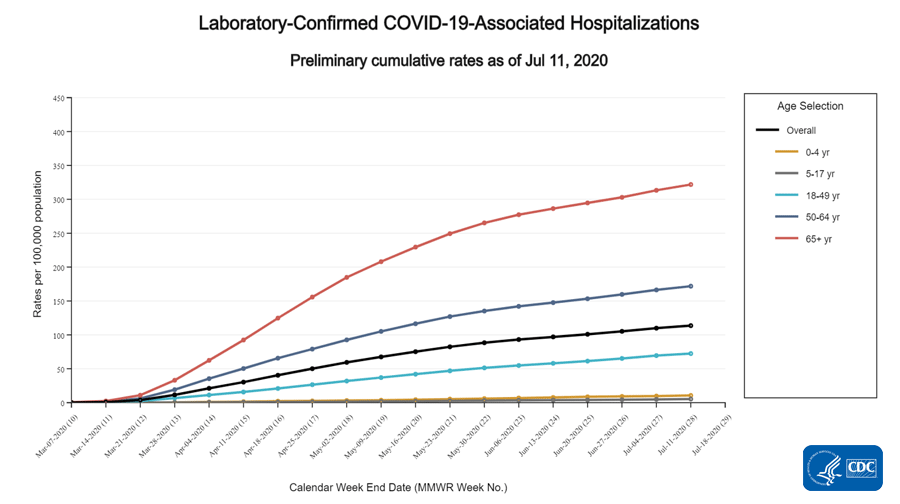
As of July 11, the CDC reports that persons between age 18-49 were hospitalized at a peak weekly rate of approximately 75 out of 100,000 people; ages 50-64 were hospitalized at a peak weekly rate of approximately 175 per 100,000 people; and the 65 and older age group was hospitalized at a peak weekly rate of approximately 325 per 100,000 people – making the >65 group over 4 times more likely to require hospitalization than the 18-49 age group.
This information is important because it points to what would have happened to our economy if the shutdowns were never implemented (see the example from Sweden, here). 93% of our economy is staffed by those under 65 years old and most of the annual consumer spending is by people under 65 years of age as well. Thus, over 80% of deaths involving COVID-19 impacted only 7% of our labor force and 25% of our consumers, leaving 93% of our labor force and 75% of our consumer base relatively unaffected by COVID-19.
The economic impact was based on forced shutdowns of businesses despite the information that showed the at-risk population was the 65 and older age group.
Unemployment was falling and businesses were reopening earlier this summer until shutdowns were re-implemented because of increases in COVID-19 infections. This impulsive “closure” trend will eliminate the possibility of a V-shaped recovery and necessitate a harmful W-shaped recovery, causing greater unemployment numbers in the future and strange inclinations by Congress to simply create another stimulus package. The responsibility for the sharp downturn in our economy must rest squarely on the lap of Congress and those who are shaping destructive policy. If Congress acts now by releasing people to be free to go to work and to consume products in a normal fashion, the second downward spiral may be eliminated or at least greatly reduced.
Perspective: The economy wouldn’t have crashed from COVID-19, but it did crash from incompetent policies. A prolonged W-shaped recovery is eminent if the policy makers continue with the mantra that they flattened the curve by shutting down the country. Congress should rather take the economy out of quarantine and allow our labor force to get back to Making America Great Again.
James M. Spillers
 USA Perspectives